
Recruiters spend an average of 7 seconds scanning a resume before deciding whether to keep reading — and for remote roles, that window might actually be shorter, because the applicant pool is global. If you’ve been sending out applications and hearing nothing back, your resume might be the problem. These remote jobs resume tips will help you fix that, fast.
Quick Facts
- Remote job postings on LinkedIn attract 46% of all job applications, despite representing roughly 15% of listings — competition is fierce.
- Most remote roles require demonstrated self-management skills and familiarity with async communication tools like Slack, Notion, or Asana.
- Hiring timelines for remote positions average 3–5 weeks from application to offer, but ATS screening can eliminate you in seconds.
- Red flag: listing a generic objective statement instead of a targeted remote-focused summary — hiring managers skip these entirely.
In This Article
- Why Remote Resumes Need a Different Approach
- Remote Jobs Resume Tips for Your Header and Summary
- How to Show You Can Actually Work Remotely
- Beating the ATS — Keywords That Open Doors
- Remote Jobs Resume Tips for Your Experience Section
- Skills, Tools, and Tech — What to Include
- Formatting Mistakes That Cost You the Interview
- Frequently Asked Questions

Why Remote Resumes Need a Different Approach
Here’s something most job seekers don’t realize: applying for a remote role isn’t the same as applying for an in-office position with a flexible schedule. Remote employers are hiring differently — screening for different traits, using different tools to evaluate candidates, and filtering for very specific signals that tell them you’ll thrive without a manager looking over your shoulder.
Think about it from the hiring manager’s perspective. They can’t read your body language in a hallway. They can’t see how you operate when things get hectic. All they have — at least initially — is a document. Your resume has to do a lot of heavy lifting.
The good news? Most of your competition is submitting the exact same generic resume they’d send to any job. A targeted, remote-specific resume stands out immediately — not because it’s flashy, but because it’s relevant. Remote hiring managers can spot a resume that “gets it” within those first few seconds.
What does “getting it” mean? It means your resume communicates three things without the reader having to dig: you can manage your time independently, you communicate proactively, and you have the tools and tech fluency to work in a distributed team. If those three signals aren’t showing up clearly, your application is likely getting filtered out before anyone reads your job history.
Remote work has fundamentally shifted what employers value in candidates. Adaptability, async communication skills, and documented output matter far more than proximity to an office or “team player” platitudes. Your resume should reflect that shift — clearly and specifically.
Remote Jobs Resume Tips for Your Header and Summary
Your header seems simple, right? Name, contact info, done. But for remote applications, there are a few things you want to handle intentionally — and a few traps to sidestep.
First: your location. You don’t need to list your full mailing address anymore. That’s a relic from the fax-resume era. Instead, list your city and state (or country if you’re applying internationally), followed by something like “Open to Remote” or simply “Remote” if you’re already working that way. This signals availability without handing out your home address to dozens of strangers.
Now, the professional summary. This is your 3–4 sentence pitch, and it’s the most underused real estate on a resume. Most people write something vague like “results-driven professional with 8 years of experience.” That sentence could describe literally anyone. Instead, write something that speaks directly to remote work.
Try this structure: who you are + what you do + how you do it in a remote context + one quantified result. For example: “Customer success manager with 6 years of experience supporting SaaS clients across North America and Europe. Skilled at async collaboration using tools like Zendesk, Notion, and Zoom. Consistently maintained 95%+ CSAT scores while working fully distributed across three time zones.”
See the difference? That summary tells a story. It proves remote competence without making a vague claim about it. These remote jobs resume tips aren’t about reinventing yourself — they’re about framing what you already do in the language remote employers actually respond to.
“The summary section is where I decide if I’m reading the rest of the resume or moving on. If it doesn’t tell me something specific about how this person works, I’m already skimming.”
— Senior Talent Acquisition Manager, mid-size SaaS company
Include your LinkedIn URL (make sure it’s customized and up-to-date) and, if relevant, a link to a portfolio, GitHub, or personal site. These carry real weight for remote roles, where showing your work matters more than describing it.
How to Show You Can Actually Work Remotely
Saying “I’m a great remote worker” on your resume is the equivalent of saying “I’m a people person” — everyone says it, and it means nothing without proof. The goal here is to show, not tell.
If you’ve worked remotely before — even partially — call it out explicitly. In your job title or company description, note that the role was remote or hybrid. You can do this cleanly: “Marketing Coordinator | Fully Remote” or “Software Engineer | Remote (US-based team, async-first).” That single label carries more credibility than a paragraph of claims.
What about people who’ve never officially worked remotely? You still have relevant experience. Did you freelance? Complete online certifications? Coordinate a volunteer project with teammates in other cities? All of these demonstrate the core competencies remote employers care about: independent execution, digital communication, and self-directed learning.
Look at your bullet points. Do any of them mention managing your own project timelines, communicating results to stakeholders asynchronously, or training others through documentation? Those are remote-work signals. Make them more explicit. Instead of “Managed Q3 product launch,” try “Led Q3 product launch independently, coordinating with cross-functional stakeholders via weekly async updates and shared Notion documentation.”
Concrete proof beats abstract claims every time. Quantify wherever you can. How many projects did you manage simultaneously? How large was the team you coordinated across? What results did you deliver while working independently? Numbers give hiring managers something to anchor to — and they make your resume scannable in that 7-second window.
Beating the ATS — Keywords That Open Doors
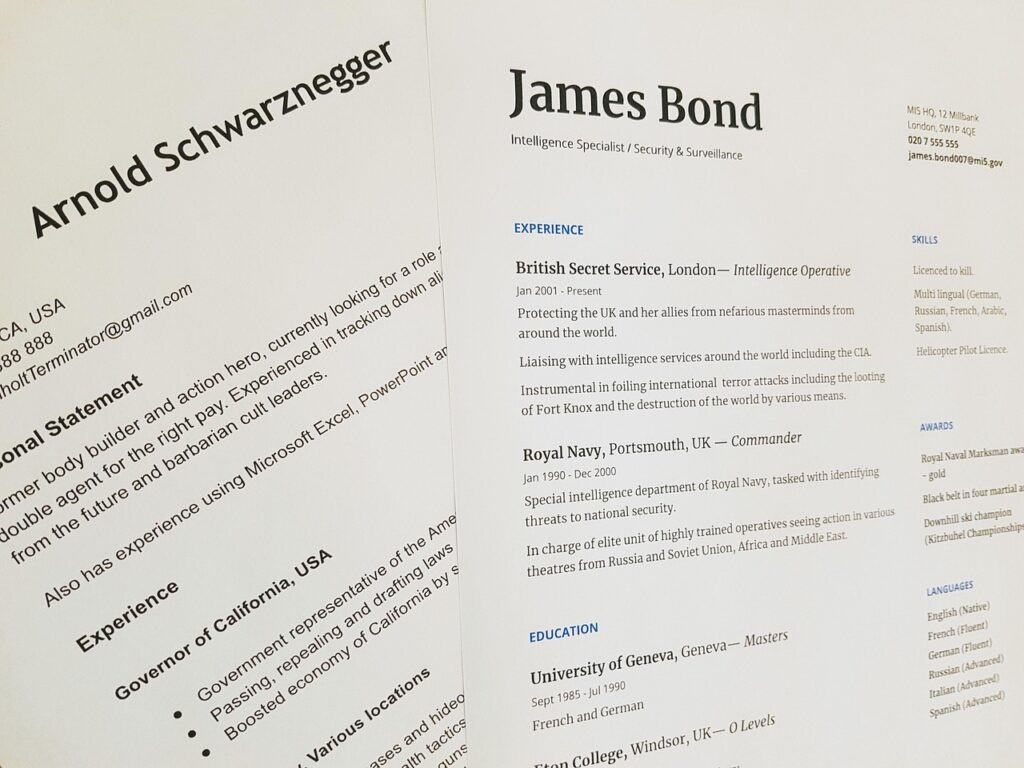
Before a human ever reads your resume, it’s almost certainly going through software. Applicant Tracking Systems filter, rank, and sometimes eliminate resumes based on keyword matches. Understanding this isn’t about gaming the system — it’s about communicating clearly in the language employers use.
For remote roles specifically, there are two layers of keywords you need: role-specific keywords (the skills and tools for your actual job function) and remote-specific keywords (phrases that signal remote readiness). Both matter.
Remote-specific keywords that tend to appear in job descriptions — and should therefore appear in your resume — include phrases like “remote collaboration,” “asynchronous communication,” “distributed team,” “self-directed,” “cross-functional coordination,” and specific tool names like Slack, Zoom, Trello, Asana, Jira, Notion, HubSpot, or Salesforce, depending on your field.
Here’s a practical method: copy the job description into a free tool like Jobscan or even a word cloud generator. What terms appear most frequently? Those are your priorities. Now audit your resume. Are those terms present — in the same language the employer uses? If the job posting says “project management” but your resume says “project coordination,” that mismatch can cost you a match in the ATS, even if the skills are identical.
Tailor every application. Yes, every single one. It sounds tedious, and it is — but a tailored resume consistently outperforms a generic one. Even 15 minutes of targeted tweaking per application dramatically improves your response rate. That’s not an opinion — recruiters say it constantly, and the data backs it up.
Remote Jobs Resume Tips for Your Experience Section
Your experience section is the core of the document — and it’s where most remote job seekers leave the most opportunity on the table. Generic bullet points are the enemy. Specificity is your best friend.
The classic mistake: writing job duties instead of accomplishments. “Responsible for managing social media accounts” tells a hiring manager what you were supposed to do. “Grew LinkedIn following from 2,400 to 11,000 in 14 months through a consistent async content strategy” tells them what you actually did — and how well you did it.
Use the CAR framework: Context, Action, Result. What was the situation? What did you do about it? What happened because of it? Applied consistently, this structure turns a flat list of responsibilities into a compelling track record.
“I can tell within three bullet points whether someone actually understands what drove their results or whether they’re just listing tasks. Remote hires need to be self-aware about their impact — that self-awareness should show up on the page.”
— Remote Hiring Lead, growth-stage tech startup
For remote roles specifically, pay attention to which accomplishments involved independent execution, cross-timezone coordination, or async workflows. Elevate those. They’re the most relevant signals in your history — even if they weren’t your biggest wins in a traditional sense.
How far back should you go? Generally, 10–15 years is the sweet spot for most professionals. Earlier experience can be summarized in a single line (“Additional experience in X and Y — details available upon request”) or cut entirely. Remote hiring managers care about recent, relevant experience — not a complete career archaeology project.
And if you have gaps? Own them briefly in a cover letter. Unexplained gaps don’t necessarily sink applications, but they do prompt questions. A simple, confident framing — “I took a year to care for a family member while completing an online project management certification” — is far better than leaving a recruiter to speculate.
Skills, Tools, and Tech — What to Include
Remote employers are practical people. They want to know: can you plug into their tech stack on day one? Can you communicate effectively without being in the same room? Your skills section is where you answer those questions directly.
Split your skills section into two categories if your field warrants it: Technical Skills and Professional Skills (or Hard Skills and Soft Skills, depending on your industry norms). This makes it scannable — both for ATS and for the hiring manager doing a quick review.
For technical skills, list actual tool names and platforms, not vague descriptors. “Proficient in Microsoft Office” is the 2009 equivalent of saying you know how to use a phone. Instead: “Asana, Notion, Slack, Google Workspace, Zoom, Loom, Zapier” — specific, searchable, current.
For soft skills in a remote context, the ones that carry real weight are: written communication, time management, proactive reporting, and comfort with ambiguity. But — and this is critical — don’t just list them. Back them up in your experience bullets. “Strong written communicator” means nothing unless your bullet points demonstrate it through outcomes.
Should you include a proficiency level for tools (beginner, intermediate, expert)? Only if you’re confident in the accuracy and if the role requires a specific level. Otherwise, listing a tool implies competence. Over-qualifying yourself with “familiar with” signals hesitation — either include a tool or don’t.
Certifications deserve their own section if you have relevant ones — especially for remote roles. Google Project Management Certificate, HubSpot certifications, AWS credentials, Scrum Master, or any industry-specific credentials that employers in your field recognize. These add credibility and fill keyword gaps naturally.
Formatting Mistakes That Cost You the Interview
A well-written resume in the wrong format is still a broken resume. Formatting issues can make a qualified candidate invisible — not because the content is weak, but because the document itself is hard to read, ATS-unfriendly, or just visually chaotic.
Let’s go through the most common formatting mistakes remote applicants make — and how to fix them fast.
Fancy templates with columns, tables, or text boxes. These look impressive in a PDF viewer but become scrambled nonsense when an ATS parses them. Stick to a single-column layout with clean section headers. Save the design portfolio for your actual portfolio site.
Using graphics, icons, or profile photos. In North American hiring contexts especially, photos are a liability (bias concerns, ATS parsing issues), and icons just add confusion. Clean text wins.
Inconsistent formatting. Different fonts, random bolding, inconsistent date formats — these details signal carelessness. Remote roles often require meticulous written documentation. A sloppy resume suggests sloppy work.
Wrong file format. Unless the application specifically requests a Word document, submit a PDF. PDFs preserve your formatting across every device and operating system. No surprises for the hiring manager.
Too long or too short. One page for under 5 years of experience. Two pages for most professionals. Three pages only for senior executives or academics with extensive publication lists. A two-and-a-half-page resume that could be trimmed to two is a red flag — it says you can’t edit your own work.
One more thing: proofread like your career depends on it — because for this one document, it kind of does. Typos on a resume for any role are a concern. Typos on a resume for a remote role, where written communication is everything? That’s often an immediate pass.
Frequently Asked Questions
Should I specifically say “remote” on my resume if I’m targeting remote jobs?
Yes — and it helps in a few specific places. Label past remote roles as “Remote” in the job title or company line. Include remote-relevant keywords in your summary and skills section. Some job seekers also add a brief line in their header like “Available for remote roles” or “Remote — [City, State].” It sounds simple, but it immediately signals to both ATS and hiring managers that you’re intentionally applying for distributed work, not just hoping for flexibility.
What’s the best resume format for remote job applications?
A clean, single-column reverse-chronological format is the safest and most effective choice for the vast majority of remote applications. It’s ATS-friendly, easy to skim, and familiar to hiring managers. Functional resumes (which lead with skills over experience) can work if you’re making a significant career change, but they often raise red flags because they obscure your work history. When in doubt, stick to the standard format and let your content do the differentiating.
How do I handle remote jobs resume tips if I’ve never worked remotely before?
Focus on transferable experiences that demonstrate remote-readiness — independent project management, cross-functional collaboration, digital communication tools you’ve used, and any freelance or contract work. Certifications completed online, volunteer coordination, or self-directed learning projects all count. Frame existing accomplishments to highlight the self-direction, async communication, and independent execution they required. Everyone starts somewhere with remote work, and smart employers know that.
How many pages should a remote job resume be?
For most professionals, two pages is the sweet spot. One page works well if you have fewer than 5 years of experience. Going beyond two pages is only justified for senior-level or executive roles with extensive, directly relevant history to include. The key question isn’t “how much can I fit?” — it’s “what does the hiring manager actually need to see to say yes?” Everything else gets cut.
Do I need a cover letter for remote job applications?
If the application gives you the option to include one, write one — always. A well-crafted cover letter for a remote role is a chance to demonstrate exactly the written communication skills they’re hiring for. Keep it to three tight paragraphs: why you’re interested in the specific role, your most relevant remote-work evidence, and a clear call to next steps. Generic cover letters are worse than none, so personalize it or skip it entirely.
What tools should I list on my resume for remote jobs?
List the tools you actually know how to use — and make them specific and current. Common remote work tools that appear frequently in job postings include Slack, Zoom, Notion, Asana, Trello, Monday.com, Loom, Google Workspace, Microsoft Teams, and Confluence. Industry-specific tools (like Figma for designers, Jira for engineers, or HubSpot for marketers) should also be listed. Group them logically by function, and only include tools you could speak to confidently in an interview.
Your Next Step
These remote jobs resume tips aren’t theory — they’re actionable, and the best time to apply them is right now. This week, pull your current resume, open three job postings you want to apply to, and do one focused pass: update your summary to signal remote readiness, relabel any past remote experience explicitly, and replace at least three generic bullet points with quantified CAR-format accomplishments. Then run it through a free ATS checker before you submit. Small, specific changes compound quickly — and the remote job market rewards candidates who put in the work that others skip.