Here’s a number that should wake you up: according to LinkedIn’s 2024 Work Trends report, remote job postings receive up to 50% of all applications despite representing only about 10% of listings — meaning the competition is fierce, but the demand from workers is undeniable. If you’re seriously thinking about a career change remote 2026, you’re not chasing a trend. You’re responding to a fundamental shift in how work actually gets done. This guide walks you through exactly how to make that move — strategically, realistically, and without wasting a year spinning your wheels.
Quick Facts
- Remote roles in tech, healthcare administration, and digital marketing pay between $55,000 and $135,000 annually depending on experience and specialization
- Most hiring managers scan for measurable results and async communication skills — not just a list of previous job titles
- Remote job searches typically take 3–6 months for career changers; starting your prep now puts you ahead of the 2026 hiring surge
- Red flag to avoid: “remote-friendly” listings that bury a relocation requirement in paragraph four of the job description
In This Article
- Why 2026 Is the Right Moment for a Remote Career Change
- The Remote Industries Actually Hiring Career Changers
- Skills That Make Hiring Managers Say Yes
- How to Position Your Resume for a Career Change Remote 2026 Role
- Where to Find Legitimate Remote Jobs (And Dodge the Scams)
- Nailing the Remote Interview and Landing the Offer
- Building Your Career Change Remote 2026 Action Plan
- Frequently Asked Questions

Why 2026 Is the Right Moment for a Remote Career Change
Timing matters in career transitions. And right now, the timing is genuinely good — not in a hype-filled way, but in a structural, data-backed way.
Here’s what’s happening. Companies that rushed back to offices in 2023 and 2024 are quietly re-expanding their remote headcount as they realize the talent pool for fully on-site roles has narrowed dramatically. Meanwhile, a wave of Baby Boomer retirements is opening mid-level and senior remote positions that weren’t accessible to career changers even three years ago.
There’s also a skills-gap dynamic working in your favor. Many industries — cybersecurity, UX design, data analytics, healthcare IT — are adding remote headcount faster than traditional pipelines can supply candidates. That creates entry points for motivated career changers who build targeted skills rather than waiting for a “perfect” background.
Does that mean it’s easy? Absolutely not. Competition for fully remote roles is still intense, particularly at the entry and mid-levels. But career changers who approach 2026 with a clear strategy — specific target role, transferable skills story, and a network that knows they’re looking — have a real shot.
The workers who struggle are the ones who decide to “go remote” without deciding what they actually want to do. The remote part is a work arrangement. The career change is the actual work. Keep those two things distinct in your planning and you’ll move faster.
The Remote Industries Actually Hiring Career Changers
Not every remote industry welcomes people from outside. Some — like licensed clinical social work or certified public accounting — have hard credential walls that take years to climb. Others are genuinely porous, rewarding demonstrated skill over linear experience.
These are the sectors where career changers are landing remote roles right now, and why:
Tech-Adjacent Roles (Project Management, QA, Technical Writing) — You don’t need to code to work in tech. Project managers, QA analysts, and technical writers are in constant demand at software companies, and many of these roles are fully remote. A background in teaching, healthcare coordination, or operations translates surprisingly well.
Digital Marketing and Content Strategy — This field has always been remote-friendly, and it keeps growing. Glassdoor salary data puts mid-level content strategists between $65,000 and $90,000, with fully remote roles representing a majority of listings in that range. Strong writers from journalism, education, or communications backgrounds make this transition regularly.
Customer Success and B2B Account Management — If you’ve ever managed client relationships in any field — retail, healthcare, hospitality — you’ve got a foundation here. SaaS companies hire aggressively for customer success managers, and the roles are predominantly remote.
Healthcare Administration and Medical Coding — The BLS projects healthcare occupations to add more jobs than any other sector through 2032. Remote medical coders, billing specialists, and care coordinators are a growing slice of that growth.
“The career changers who get hired fastest aren’t the ones with the most transferable skills — they’re the ones who can tell a coherent story about why this next role is the logical next step for them.”
— Hiring Manager, SaaS Startup (anonymous, via Upilzo community interview)
Cybersecurity — Demand is severe. ISC2’s 2023 Cybersecurity Workforce Study found a global gap of 4 million unfilled cybersecurity positions. Entry-level remote analyst roles are actively recruiting from military, IT support, and even law enforcement backgrounds.
Skills That Make Hiring Managers Say Yes
Remote work has its own skill set — and it’s not just “comfortable with Zoom.” Hiring managers for distributed teams are evaluating you on things that never come up in an office job interview.
What actually moves the needle:
Async communication. Can you write a Slack message or a project brief that eliminates the need for a follow-up meeting? This is genuinely rare. People who can communicate with precision and context — in writing, without real-time back-and-forth — get noticed immediately on distributed teams.
Self-direction and output ownership. Remote managers can’t see you working. They can only see what you produce. Candidates who can speak to specific outcomes — “I managed a 12-week content calendar that increased organic traffic by 34%” — land jobs. Candidates who describe tasks and responsibilities don’t.
Tool fluency. You don’t need to master everything, but familiarity with project management platforms (Asana, Notion, Linear), communication tools (Slack, Loom), and cloud collaboration (Google Workspace, Confluence) signals that you can plug in quickly. Most are learnable in a weekend.
Time zone and calendar discipline. If you’re applying for roles with distributed teams, knowing how to manage cross-time-zone collaboration is a genuine differentiator. Mention it specifically if you have experience.
And honestly? Emotional resilience matters too. Remote work can be isolating. Teams that hire remotely know this, and they’re screening for self-awareness about it. If an interviewer asks how you stay connected or manage your energy — that’s not small talk. That’s an evaluation.
How to Position Your Resume for a Career Change Remote 2026 Role
Your resume has one job: make a hiring manager believe you can do their job, not just the job you had. For career changers, that means reframing — not fabricating.
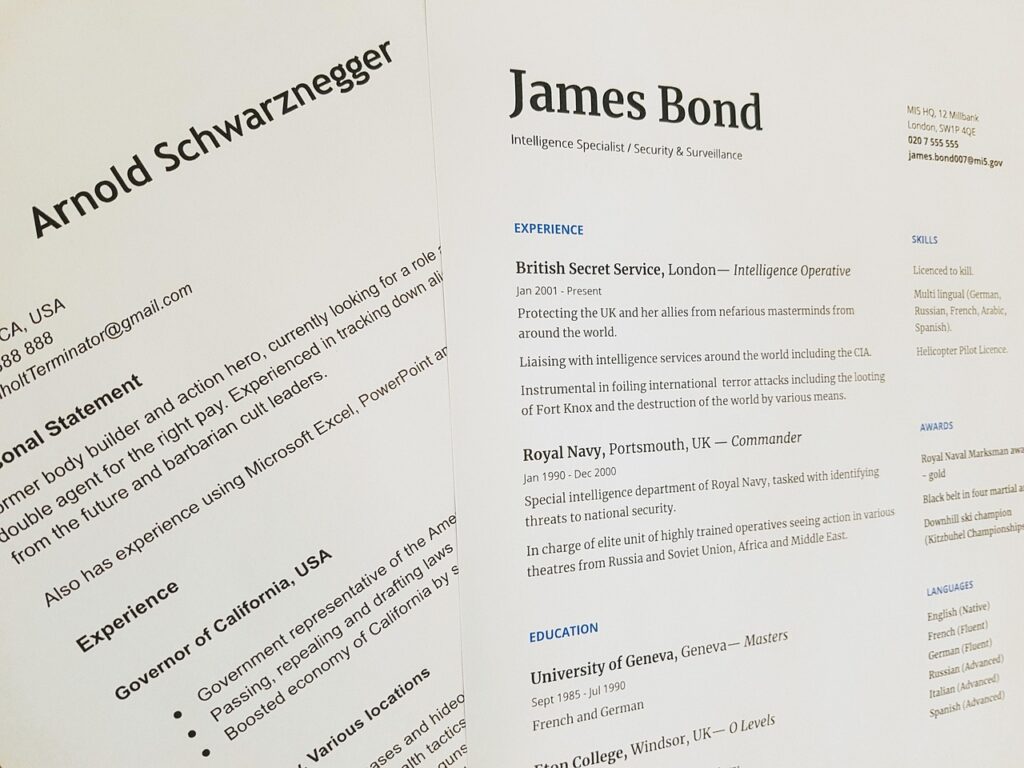
Start with a functional summary at the top. Not an “objective” (nobody reads those). A three-to-four sentence professional summary that explicitly names your target role, highlights your most relevant transferable skills, and signals that you’ve done the work to prepare. Something like: “Operations manager with 8 years in healthcare logistics transitioning to remote project management roles in health tech. PMP-certified. Led cross-functional teams across 4 time zones.” That’s specific. That’s useful.
Reframe your bullet points around outcomes, not duties. “Responsible for client onboarding” becomes “Reduced client onboarding time by 22% by redesigning a 6-step intake process.” Every bullet should answer the question: “So what?”
Tailor every application. This isn’t optional for career changers. Your resume should use the same language the job posting uses — not because you’re gaming an ATS (though that helps), but because it demonstrates you actually read the listing. Spray-and-pray applications from career changers get filtered out fast.
Consider adding a “Relevant Projects” section if your formal job history doesn’t tell the right story. A freelance content project, a volunteer coordination role, or a self-directed certification — these count. They show initiative and direction, which is exactly what remote hiring teams want to see.
“I’ve hired career changers over candidates with direct experience more times than I can count. The difference was almost always the resume — one told a forward-looking story, the other just listed old jobs.”
— Director of Talent Acquisition, enterprise SaaS company (anonymous, paraphrased from recruiter roundtable)
Where to Find Legitimate Remote Jobs (And Dodge the Scams)
The remote job market has a fraud problem. It’s gotten worse, not better. Before we talk about where to look, let’s be clear about what to avoid.
Scam signals to recognize immediately: job postings with no named company or hiring manager, “interviews” conducted entirely via text or WhatsApp, requests for your bank details or equipment deposits before you’re hired, and salaries that seem implausibly high for entry-level remote work. If something feels off — it is.
Now, where to actually look:
LinkedIn Jobs — Still the most reliable source for legitimate remote postings, particularly at mid-level and above. Use the “Remote” filter aggressively. Set job alerts for your specific target titles.
We Work Remotely and Remote.co — Curated job boards specifically for distributed roles. Quality over quantity. Less noise than general job boards.
FlexJobs — Paid subscription, but every listing is vetted. Worth the cost if you’re serious. Particularly strong for career changers moving into writing, virtual assistance, or education.
Company careers pages directly — Underused by most job seekers. Companies often post remote roles on their own site before syndicating to job boards, and applications through the direct portal sometimes get faster review.
Networking remains the highest-yield activity — even for remote jobs. Reach out to former colleagues, college connections, or people in your target industry on LinkedIn with a brief, genuine message. Not a mass copy-paste. A specific note referencing their work and what you’re exploring. Referrals bypass the ATS entirely and dramatically increase your odds of getting a human review.
Nailing the Remote Interview and Landing the Offer
Remote interviews are different. Not harder — different. And most candidates walk in underprepared for the specific ways they differ.
Your environment is part of your first impression. A clean, well-lit background with stable internet signals professionalism before you say a word. It sounds basic. You’d be surprised how many candidates show up with a cluttered wall and spotty audio for a role that requires remote communication skills.
Behavioral questions are the core of most remote interviews, and career changers need to prep these hard. The STAR method (Situation, Task, Action, Result) is well-known — but the key for career changers is selecting stories that showcase transferable behaviors: handling ambiguity, working independently, communicating across departments, driving outcomes without direct authority.
Expect questions about remote-specific scenarios: “How do you stay productive without a structured office environment?” or “Tell me about a time you had to resolve a miscommunication in a distributed team.” Have real answers. Vague answers here are disqualifying.
Ask smart questions. Not “what does the company do” — you already know that. Ask about team communication rhythms, how success is measured in the first 90 days, and what the biggest challenge in the role is right now. These signal real engagement and help you evaluate fit.
On salary: know your number before the interview, not after. Research Glassdoor, Levels.fyi (for tech roles), and LinkedIn Salary for the specific role and company size. Don’t undersell a career change — the right reframe of your experience supports a fair market rate ask.
Building Your Career Change Remote 2026 Action Plan
Everything above is useful. None of it matters without a plan you’ll actually follow. So let’s get specific.
If your goal is to be in a new remote role by mid-to-late 2026, here’s a realistic timeline working backward:
Now through Month 2: Decide on your target role and industry. Not a shortlist — one primary target. Research what the role actually requires. Identify the two or three skills gaps between your current background and that role. Start closing those gaps through courses, certifications, or freelance projects.
Month 3–4: Rebuild your LinkedIn profile around your target role. Rewrite your resume. Create or update a portfolio if your target role needs one (writing, design, marketing, project management all benefit from portfolio evidence). Start networking — five meaningful outreach messages per week.
Month 5–6: Begin applying, but thoughtfully. Twenty targeted applications beats two hundred scattershot ones for career changers. Track every application in a spreadsheet. Follow up professionally. Treat every interview as a data point, not a verdict.
The biggest mistake people make with a career change remote 2026 plan? Waiting until January 2026 to start. Companies that are hiring in Q1 or Q2 of 2026 are building those teams now — and the candidates who get hired in that window are already networking, already building skills, already visible. Start now. The runway matters.
You don’t need everything to be perfect before you begin. You need a direction, a few concrete first steps, and the willingness to iterate as you go.
Frequently Asked Questions
Is it realistic to make a career change to remote work in 2026 with no tech background?
Absolutely realistic — many remote roles don’t require technical skills. Customer success, digital marketing, content writing, project management, and healthcare administration all have fully remote pathways that reward communication skills, organizational ability, and domain expertise from previous careers. The key is targeting roles that align with what you already do well, then filling in the gaps strategically.
How long does a career change to a remote role usually take?
Most career changers targeting remote roles realistically spend 3–6 months in active job search mode, not counting prep time. Preparation — upskilling, resume rewriting, networking — adds 1–3 months on the front end. Starting your groundwork 6–9 months before you want to make the move is a smart buffer. Rushing the prep phase almost always extends the search phase.
Do remote jobs pay less than in-office roles?
Not consistently. For roles at mid-level and above in tech, marketing, and healthcare IT, remote salaries are typically competitive with or equal to in-office equivalents at comparable companies. Some large tech employers have historically adjusted pay for employees in lower cost-of-living areas, but this practice varies widely. Research specific companies and roles using Glassdoor and LinkedIn Salary before assuming a pay cut.
What certifications actually help for a career change to remote work?
It depends entirely on your target role. Google’s Career Certificates (Data Analytics, Project Management, UX Design) are genuinely respected and affordable. CompTIA Security+ opens doors in cybersecurity. HubSpot certifications carry weight in marketing. AHIMA credentials help in healthcare coding. Avoid paying for general “remote work” certifications that aren’t tied to a specific role — they don’t move the needle with hiring managers.
How do I explain a career change in a cover letter without sounding apologetic?
Lead with enthusiasm and relevance, not explanation. Instead of “Although my background is in X, I’m hoping to transition to Y,” try “My five years in X gave me a direct foundation in [specific skill] — which is exactly what this role needs.” One sentence of transition context is fine. Then move immediately to what you bring. Confidence in your own pivot is persuasive; over-explanation signals doubt.
Are remote job scams increasing, and how do I spot them?
Yes — the FTC and BBB have both reported rises in fake remote job postings. Key red flags: no company name or verifiable employer, interviews conducted via text or WhatsApp only, requests for personal financial information before hiring, and salaries that seem unusually high for entry-level roles. Always verify a company independently before applying or sharing information. Legitimate employers don’t ask for equipment deposits or bank details upfront.
Your Next Step
A successful career change remote 2026 doesn’t happen because the market opened up — it happens because you prepared while others waited. This week: pick one target role, update the headline and summary on your LinkedIn profile to reflect where you’re going (not just where you’ve been), and reach out to three people already working in that space. Small, consistent moves compound faster than you think — and the window to get ahead of next year’s competition is right now.